Your boardroom projector won't connect. The lights are too bright for the presentation. Someone's hunting for the remote while three executives wait. It's a moment, but it costs time, credibility and focus.
Office automation should be about removing friction from the workday so your team can do what they're actually paid to do. When systems talk to each other and respond to how you work, rather than the other way around, efficiency stops being theoretical.
Modern businesses in Cayman are starting to realise that automation isn't a luxury add-on. It's a strategic advantage that shows up in smoother meetings, lower running costs and a workspace that feels as polished as the work happening inside it.
What office automation looks like beyond basic gadgets
Real office automation isn't a smart thermostat stuck on the wall. It's integrated control across the systems that shape your working environment: lighting, climate, AV, access and scheduling.
The difference is coordination. A meeting room that dims the lights, lowers the blinds, powers up the display and routes the right input when someone walks in with a laptop isn't magic. It's programmed logic doing repetitive tasks faster and more reliably than a person ever could.
Boardrooms and meeting rooms are where automation earns its keep. One-touch control means presentations start on time. Video calls connect without IT scrambling to troubleshoot. Lighting adjusts automatically based on time of day or screen use. The result is meetings that feel seamless, which matters tremendously when you're presenting to clients or hosting remote stakeholders.
Cayman businesses are adopting Conference room automation, which often includes wireless presentation systems, integrated video conferencing and preset scene controls. Walk in, press "present", and the room configures itself. No cables, no guesswork, no delays.
Lighting and climate scheduling might sound minor until you calculate the cost of air conditioning an empty office overnight or leaving every light on because no one remembered to switch them off. Automated scheduling cuts waste and creates consistency. Lights dim or brighten based on occupancy and daylight. Climate systems adjust by zone and time, so you're not cooling unused spaces or walking into a stuffy office at 8am.
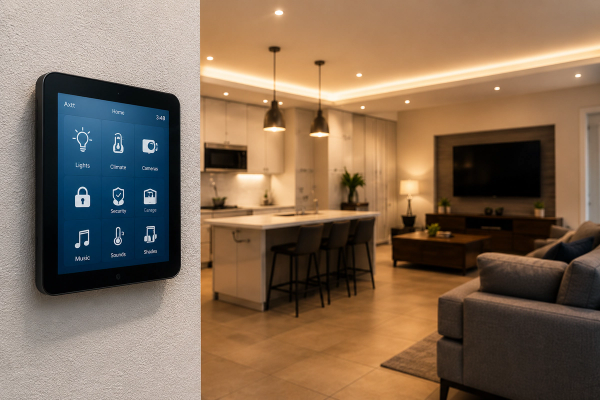
AV control used to mean a wall full of remotes and a prayer that someone remembered how to switch inputs. Business AV automation providers now consolidate everything into a single interface: displays, sound, sources, cameras. It's faster to use, easier to train staff on, and far less likely to fail during a critical moment.
Visitor-facing spaces benefit too. Reception areas with automated lighting and subtle background audio feel more welcoming. Meeting spaces that work flawlessly make a better impression than ones where you're apologising for technical delays. First impressions aren't just about décor. They're about competence, and automation signals that.
How automation improves meetings, comfort and daily operations
Efficiency isn't abstract. It's the 10 minutes you don't waste at the start of every meeting. It's the reduced energy bill. It's the receptionist who doesn't have to explain the light switches to every new hire.
Meetings run better when the technology is invisible. Installing automated office technology into Cayman firms removes the friction between intent and execution. You want to present, so you present. You want to video call Hong Kong, so you press one button and it happens. The system handles the complexity.
Comfort matters more than most businesses admit. Staff work better in environments that adapt to them. Automated climate control means fewer complaints about temperature. Scheduled lighting reduces eye strain and creates the right atmosphere for focus or collaboration depending on the time and task.
Daily operations get smoother when systems anticipate needs. Lights that turn on as staff arrive and off as they leave. Conference rooms that reset themselves after each meeting. Alerts when something isn't working, before it disrupts a client presentation.
The ROI isn't always a hard number, though energy savings alone often justify the investment. The bigger return is in time saved, errors avoided and the professional edge that comes from a workspace that simply works.
The spaces where businesses benefit most from integrated control
Not every office needs full automation, but certain spaces deliver outsize value when they're properly integrated.
Boardrooms are the obvious starting point. These are high-stakes environments where technical failure is most visible and most costly. Integrated control ensures presentations, video calls and collaborative sessions happen without drama. It's also where clients and partners form impressions, and a boardroom that works effortlessly says something about how you run the rest of your business.
Open-plan offices benefit from zoned lighting and climate control. Different areas have different needs throughout the day. Automation lets you manage that without manual intervention or blanket settings that leave half the office uncomfortable.
Reception and common areas set the tone. Automated lighting, subtle audio and climate control create a welcoming environment that feels considered rather than accidental. It's a small investment with a tangible impact on how visitors and staff experience your space.
Private offices for senior staff or client-facing roles often warrant individual control. Personalised settings for lighting, temperature and AV mean these spaces can adapt to different tasks and preferences without constant manual adjustment.
Training and multi-use rooms need flexibility. Automation allows these spaces to switch between modes: presentation, collaboration, video conferencing, or quiet work. One room, multiple configurations, no technical expertise required.
The thread connecting all of these is control. Smart business solutions companies in Cayman give you the ability to manage your environment with precision, whether that's from a wall panel, a tablet or your phone.
What to consider when planning office automation in Cayman
Automation projects fail when they're led by technology rather than need. Start with the problems you're trying to solve, not the systems you think you should install.
Identify friction points first. Where does your team waste time? What technical issues come up repeatedly? Which spaces underperform or frustrate users? Automation should address real operational challenges, not create new complexity for its own sake.
Think about integration, not devices. A smart thermostat is just a thermostat. A smart thermostat that talks to your lighting, scheduling system and occupancy sensors is automation. The value is in how systems work together, not in the individual components.
Plan for scalability. Your needs will change. Systems should be able to grow with you, whether that's adding new rooms, integrating new technology or adjusting to different ways of working. Proprietary or closed systems limit your options. Open platforms give you flexibility.
Consider your team's technical comfort. The best automation is intuitive enough that staff don't need training. If your system requires a manual or an IT callout every time someone wants to use the boardroom, it's not automation, it's a liability.
Factor in Cayman's environment. Heat, humidity and salt air affect equipment. Systems need to be specified and installed with local conditions in mind, not just copied from a temperate climate. This is where working with a provider who understands the island makes a difference.
Budget for ongoing support. Automation isn't install-and-forget. Systems need updates, occasional reconfiguration and responsive support when something goes wrong. The cheapest upfront option often costs more in the long run if aftercare is poor or non-existent.
How to choose a provider for reliable long-term performance
Office automation is a long-term relationship, not a one-off purchase. The provider you choose will shape how well your systems perform, how easily they adapt and how quickly problems get resolved.
Look for integration expertise, not just installation. Anyone can mount a screen or wire a speaker. Fewer providers can design a system where everything works together seamlessly. Ask about their experience with multi-system integration and how they approach custom requirements.
Prioritise local presence and support. When something stops working, you need someone who can respond quickly and understands your setup. Offshore support or providers without a local base in Cayman will leave you waiting when you can't afford to.
Check their approach to consultation. Good providers ask questions before proposing solutions. They want to understand your workflow, your pain points and your goals. If someone's leading with product specs rather than outcomes, they're selling hardware, not solving problems.
Evaluate their aftercare model. What happens after installation? How do they handle updates, troubleshooting and system changes? A provider who disappears after commissioning is a risk you don't need.
Ask about brands and platforms. Reputable providers work with established, reliable technology that's supported long-term. Proprietary or obscure systems might seem cutting-edge, but they're a gamble if support dries up or the company folds.
Request references and examples. Speak to other businesses they've worked with. Visit completed projects if possible. The proof is in how systems perform months and years after installation, not just on day one.
At Connect, we approach office automation as a strategic partnership. We're not here to sell you the most expensive system. We're here to design, install and support solutions that make your business run better, backed by local expertise and a commitment to long-term performance.
Make your office work smarter
Automation isn't about impressing visitors with flashy technology. It's about creating an environment where your team can focus on work that matters, where meetings start on time, where systems adapt to you rather than the other way around.
The businesses in Cayman that are investing in smart business solutions aren't chasing trends. They're gaining tangible operational advantages: lower running costs, smoother workflows and workspaces that reflect the quality of their output.
If your office feels like it's working against you rather than for you, it's worth a conversation. Book a consultation to discuss how boardroom automation Cayman businesses are using can transform your meeting spaces, or how integrated control can make your entire workspace more efficient and professional.
We'll assess your needs, explain what's possible and design a system that delivers results, not complexity. Because the best automation is the kind you stop noticing, the kind that just works.