You're off-island when the forecast changes. A tropical system strengthens. The group chat lights up. And you're left wondering: did I close the shutters? Is the AC still running? What's happening inside?
For homeowners in the Cayman Islands, especially those who split their time between properties or travel frequently, that uncertainty is exhausting. Smart home security solutions change the equation entirely. They don't just automate your home. They give you eyes, ears and control when you're thousands of miles away.
This isn't about gadgets. It's about building a property that looks after itself, keeps you informed, and responds when you need it to, especially during storm season.
Why remote visibility matters in the Cayman Islands
Cayman sits in the hurricane belt. That's not news. What is less obvious is how much risk accumulates when a property sits empty for weeks or months at a time.
Water leaks go unnoticed. Climate systems fail. Power cuts trigger cascading problems. Intruders test doors. By the time you return, the damage is done.
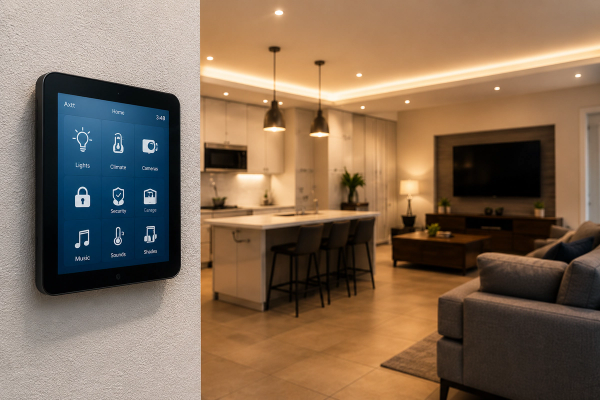
Remote property monitoring systems solve this by creating a digital layer of oversight. Cameras, sensors, environmental monitors and smart locks all feed into a single platform you can access from your phone. You're not guessing. You're watching in real time.
For second-home owners, this is transformative. You can verify that storm prep happened. Check that staff arrived. Confirm the property is secure. And if something goes wrong, you know immediately, not three weeks later when you land at Owen Roberts.
The smart systems that improve monitoring and peace of mind
Smart home automation setups are only as good as the systems you choose and how they're integrated. Here's what actually moves the needle when you're managing a property remotely.
Cameras and alerts
Outdoor and indoor cameras with motion detection let you see what's happening in real time. Modern systems send alerts to your phone the moment movement is detected. You can review footage, speak through two-way audio, or contact security if needed.
Position cameras at entry points, driveways, pool areas and any vulnerable exterior zones. Pair them with smart lighting that activates on motion. It's a visible deterrent and a practical safeguard.
Leak detection
Water damage is one of the most common and expensive problems in vacant properties. A slow leak under a sink or behind a washing machine can flood a room before anyone notices.
Smart leak sensors sit near water heaters, under sinks, around AC units and in laundry areas. When moisture is detected, you get an instant alert. Some systems can even trigger automatic water shut-off valves. That's the difference between a quick fix and a full renovation.
Climate monitoring
Humidity and temperature swings wreak havoc in tropical climates. Mould grows fast. Wood warps. Electronics fail.
Smart thermostats and climate sensors let you monitor indoor conditions remotely and adjust settings as needed. If the AC stops working, you'll know within hours, not days. You can also set schedules that reduce energy waste while keeping the property in good condition.
Lighting schedules
An empty home with no lights is an obvious target. Installations of smart lighting systems allow you to programme realistic occupancy patterns. Lights turn on and off at varied times. Exterior zones illuminate at dusk. It looks lived-in, even when it's not.
You can also control lighting manually from anywhere. Useful if you want to let a contractor in or check a specific room via camera.
Access control
Smart locks and access control systems eliminate the need for physical keys. You can grant temporary access to property managers, cleaners or maintenance teams, then revoke it when the job's done. Every entry is logged. You know exactly who came and went, and when.
For storm prep, this is invaluable. You can confirm that your team secured the property without needing to be there in person.
Why network resilience matters when owners are away
None of this works if your internet goes down. That's why robust, property-wide WiFi installations are non-negotiable for remote monitoring.
Invest in enterprise-grade networking with backup power. Use cellular failover if the main connection drops. Design the system so that critical devices stay online even during brief outages. Your cameras, sensors and locks should keep working when you need them most.
How automation supports storm-season preparation
When a hurricane watch is issued, time compresses. There's a narrow window to secure outdoor furniture, close shutters, adjust climate settings and lock down the property.
Smart home systems make this faster and more reliable. Automated window treatments can close on command. Pool equipment can be powered down remotely. Outdoor lighting can be switched off to avoid electrical issues during the storm.
You can also create pre-programmed "storm mode" scenes that execute multiple actions at once. One tap, and your home shifts into a secure, low-power state. No need to walk through a checklist or rely entirely on staff.
After the storm passes, you can assess damage remotely before returning. Check camera feeds. Verify that power is restored. Confirm the property is safe to re-enter. It's a calmer, more informed way to manage the aftermath.
Common mistakes in seasonal or vacant property setups
Most smart home ideas for modern living focus on convenience when you're home. But remote monitoring requires a different mindset. Here's where people go wrong.
Installing consumer-grade systems that aren't built for 24/7 operation. Cheap cameras and sensors fail. Batteries die. Connectivity drops. You need commercial-quality hardware designed for reliability.
Skipping professional integration. A collection of disconnected apps is not a smart home. It's a headache. Everything should feed into a single, unified platform. That's when installing home automation in Grand Cayman becomes relevant: proper integration is the difference between chaos and control.
Ignoring power backup. If the power goes out, your monitoring goes dark unless you've planned for it. Battery backups and cellular failover keep critical systems online.
Overlooking maintenance. Smart systems need updates, testing and occasional recalibration. Set up a maintenance schedule with your installer. Don't assume everything will work perfectly forever.
Focusing only on security, not environmental monitoring. Intruders are one risk. Water damage, humidity and equipment failure are far more common. A complete system addresses both.
How to build a more resilient smart home strategy
Resilience isn't about buying the most expensive equipment. It's about designing a system that anticipates problems and responds intelligently.
Start with a consultation. A specialist installer will assess your property, understand how you use it, and identify vulnerabilities. They'll recommend smart home security solutions tailored to your specific risks, whether that's storm exposure, vacancy periods or high-value contents.
Prioritise integration. Choose platforms like Control4 that unify lighting, climate, security, cameras and access control into one interface. You want a single app, not seven.
Build in redundancy. Backup power for networking equipment. Cellular failover for internet. Multiple sensors in high-risk areas. Redundancy is what keeps the system working when conditions are less than ideal.
Test everything before you leave. Run through storm scenarios. Trigger alerts. Verify camera feeds. Make sure you can control locks and lighting remotely. The time to discover a problem is not when you're in London and a storm is approaching Grand Cayman.
And finally, work with a local partner who understands Cayman properties. Storm prep here is different from Miami or Bermuda. Humidity, salt air, power infrastructure and seasonal occupancy patterns all shape what works and what doesn't.
Ready to monitor your property with confidence?
Remote visibility isn't a luxury. It's a practical layer of protection that pays for itself the first time it prevents serious damage or gives you peace of mind during storm season.
At Connect, we design smart home automation systems that work as hard as you do, whether you're on-island or halfway around the world. From cameras and sensors to full property integration, we'll build a solution that fits how you live and protects what matters most.
Book a consultation to discuss remote monitoring and security planning for your Cayman property. Let's build something resilient together.